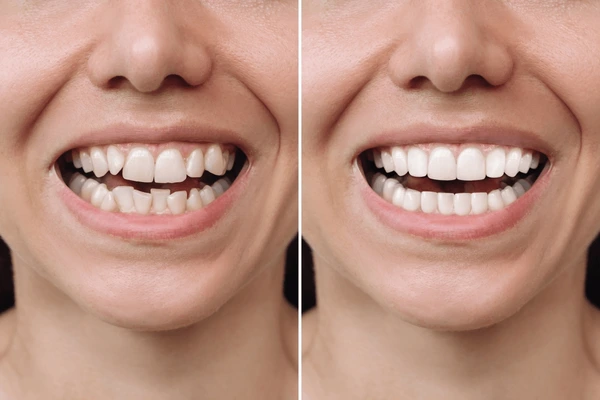


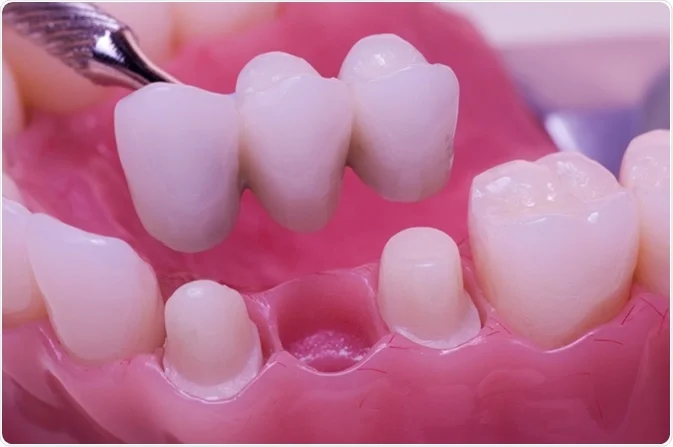
A dental bridge is a fixed prosthetic appliance used to fill the gap created by missing teeth. Its “bridges” the space between healthy adjacent teeth with the help of crowns and artificial teeth. Unlike removable dentures, bridges are cemented in place for stability and comfort.
Why Choose Dental Bridge?
Missing teeth can lead to a variety of issues, including:
A dental bridge effectively addresses these concerns by restoring structure and function to your smile.
Dental bridge is fixed prosthetic devices used to replace one or more missing teeth by “bridging” the gap between remaining teeth or implants. The main types are classified based on their method of support and design.
Traditional fixed bridge is the most commonly used type of dental bridge. In this design, the missing tooth (called the pontic) is supported by dental crowns placed on the adjacent natural teeth, known as abutment teeth. These abutment teeth are prepared and reshaped to receive crowns.
Cantilever bridge is used when there is only one adjacent tooth available for support. In this case, the pontic is anchored to a single abutment tooth rather than two. While effective in carefully selected situations, cantilever bridge is generally limited to areas with low chewing stress, such as anterior teeth.
Maryland bridge is a conservative alternative to traditional bridge, especially when minimal alteration of adjacent teeth is preferred. Instead of full crowns, a metal or ceramic framework with “wings” is bonded to the lingual or palatal surfaces of the neighboring teeth using resin cement.
Implant-supported bridge is anchored to dental implants rather than natural teeth. One or more implants are surgically placed into the jawbone, providing a stable foundation for the bridge. This type offers superior strength, long-term stability, and prevention of jawbone resorption,.
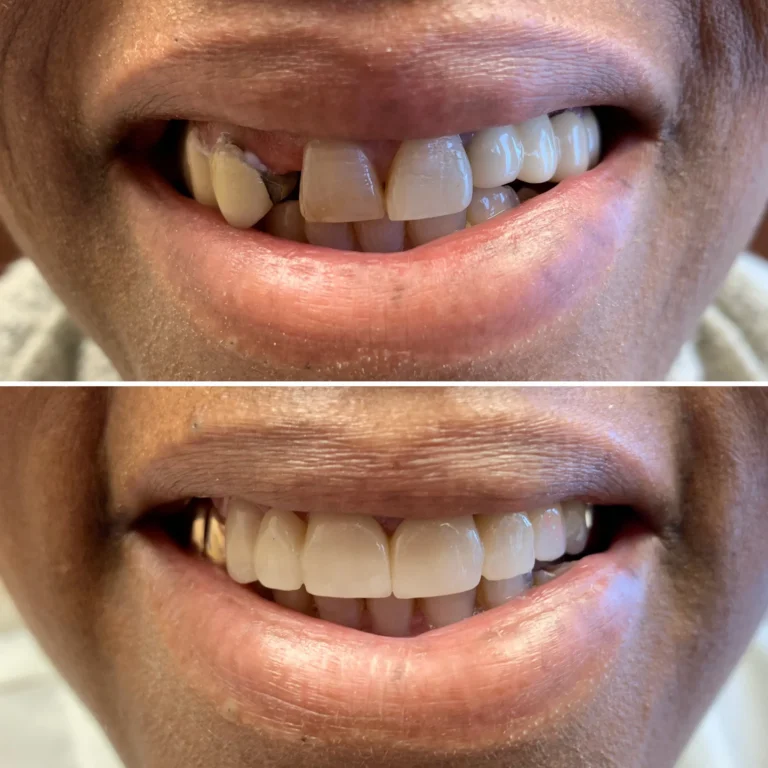
Our dentist evaluates your teeth, periodontal health, and bite to determine the best bridge option.
Adjacent teeth (abutments) are shaped to receive crowns that will support the bridge.
Precise dental impressions are taken to custom-craft your bridge for ideal fit and occlusion.
High-quality crowns and pontics are lab-made using durable materials that mimic natural teeth.
Your bridge is securely fitted and checked for comfort, bite alignment, and esthetics.
Bridges help you chew and speak comfortably while restoring the natural look of your smile.
Missing teeth can create a sunken appearance. A bridge prevents this by supporting facial structure.
A bridge keeps adjacent teeth from drifting into the empty space, preserving proper alignment and bite.
With proper care and routine dental hygiene, your dental bridge can last many years with excellent performance.
With proper oral care and regular dental visits, bridge can last 10 years or more, and sometimes even longer.
Yes, bridge is custom-designed to match your natural teeth in shape, size, and color for a seamless smile.
The procedure is generally comfortable. Local anesthesia minimizes discomfort during tooth preparation and placement.
Yes. After a short adjustment period, most patients can eat and speak normally with their dental bridge.
Yes. Depending on your case, bridge can replace multiple consecutive missing teeth when supported by healthy abutments.
Bridge is fixed and feel more natural than removable dentures. Dentures may still be recommended in cases involving multiple missing teeth with limited support.