


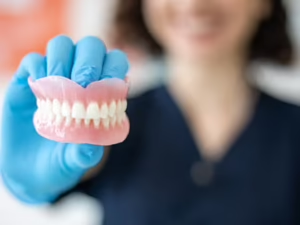
Dental implants are permanent, natural-looking tooth replacements designed to function just like your own teeth. They restore comfortable chewing and clear speech while helping maintain jawbone health and facial structure. Unlike removable options, implants provide a stable, long-term solution that feels secure and natural. With dental implants, you can smile, eat, and live with renewed confidence.
Why Are Dental Implants Important?
Dental implants are a long-term solution for missing teeth, offering several benefits over traditional dentures or bridges. They provide:
Dental implants restore both the function and aesthetics of your teeth, helping you maintain a healthy, beautiful smile.
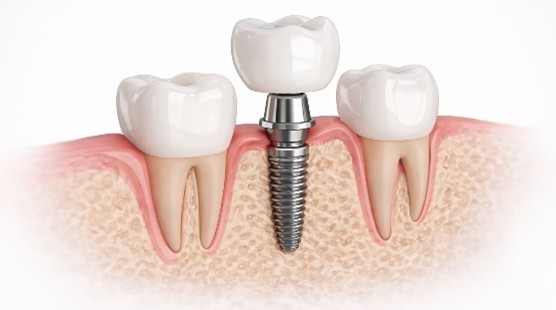
Endosteal dental implants are the most common type of dental implants that we offer. These are formed by a titanium screw that is inserted into the jaw. This screw goes on to serve as the replacement root for your missing tooth.
Patients who have insufficient bone density for regular implants can explore tooth replacement with subperiosteal dental implants. A metal framework is placed just beneath the gums to support the titanium screw.
Zygomatic implants are ideal for people with severe bone loss in their upper jaws. These implants are longer than traditional implants, so they can connect to the zygoma (cheekbone). Placing zygomatic dental implants.
Basal implants, also known as cortical implants, are anchored into the dense basal bone of the jaw. This bone is stronger and does not shrink over time, making basal implants an excellent option for patients with severe pain.
Mini dental implants are smaller in diameter compared to traditional implants and are used when space or bone availability is limited. They are often recommended for stabilizing dentures or replacing small teeth.
All-on-4 and All-on-6 implants are advanced implant techniques used to replace an entire arch of teeth using four or six strategically placed implants. This method provides a fixed.

The dentist assesses your oral health and discusses your treatment options to determine if dental implants are right for you.
A small titanium post is surgically placed into the jawbone to act as the root for the artificial tooth.
The implant post is allowed to fuse with the jawbone over a period of a few months, ensuring a strong foundation for the replacement tooth.
Once the implant is secure, an abutment is attached to the implant post to connect the replacement tooth.
A custom-made dental crown is placed on the abutment to complete the restoration, providing a natural-looking, functional tooth.
The dentist provides instructions for aftercare to ensure proper healing and long-lasting results, including maintaining oral hygiene and follow-up visits.
Dental implants are designed to look, feel, and function like natural teeth, seamlessly blending with your smile.
Implants are fixed in place and won’t slip or move like removable dentures, offering long-term stability.
Dental implants help prevent bone loss and maintain facial structure, supporting overall oral health.
A durable solution that can last for many years with proper care, offering a reliable restoration option.
Implants restore comfortable eating and clear speech, allowing you to enjoy meals and converse naturally.
Dental implants give you the confidence to smile, eat, and speak freely, enhancing your overall appearance.
Artificial tooth roots placed into the jaw to support replacement teeth.
The procedure is generally pain-free with local anesthesia and minimal discomfort afterward.
Implants can last a lifetime with proper care, though the crown may need replacing in 10-15 years.
The process takes several months, including healing and crown placement.
Most healthy individuals are candidates, but some may need additional treatments like bone grafting.
Brush, floss, and visit your dentist regularly to keep implants healthy.