Crowns or Dental Caps
Planning crowns for damaged, root canal-treated or heavily restored teeth.
Digital impressions create a detailed three-dimensional model of your teeth for crowns, caps and suitable restorative treatments.
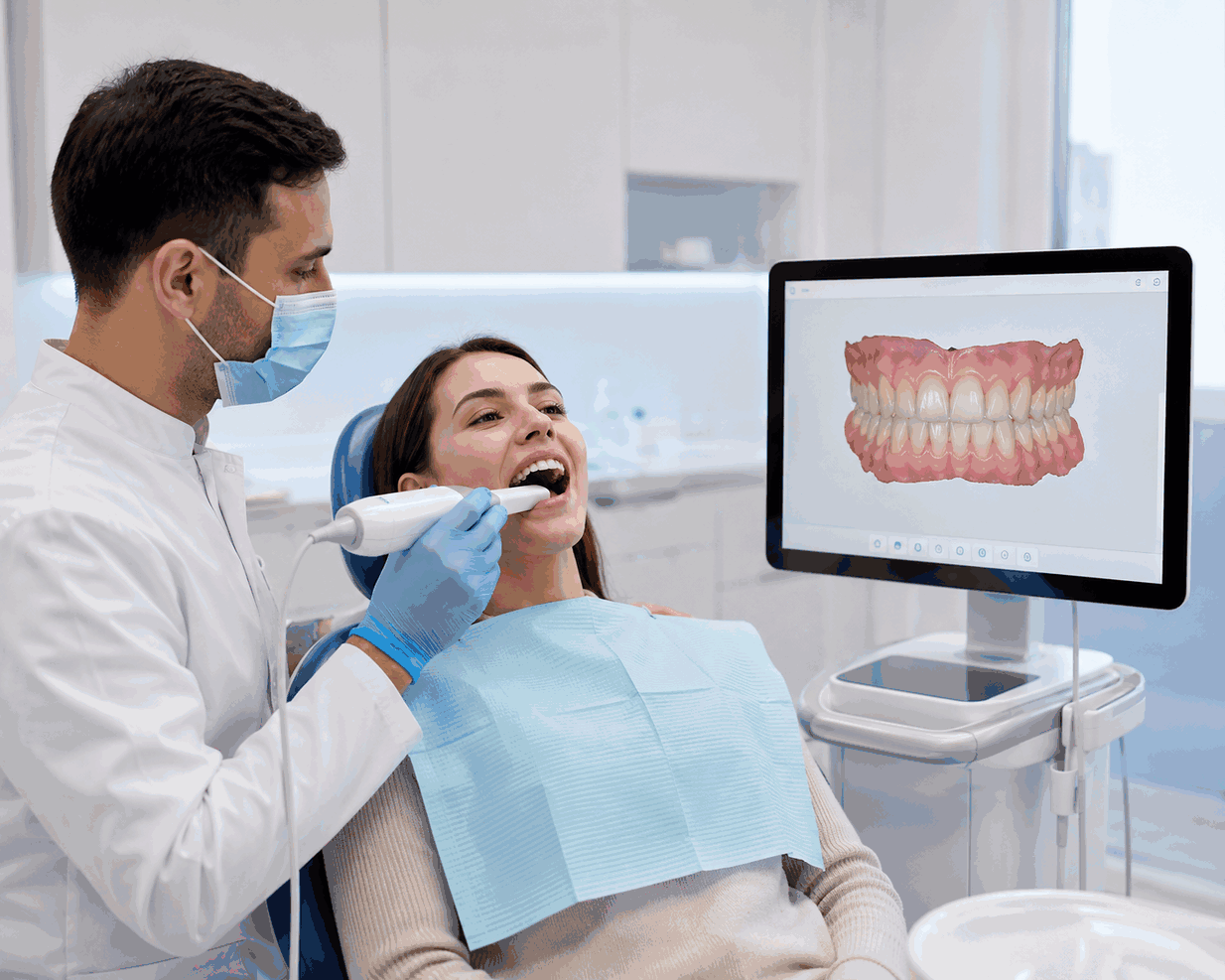
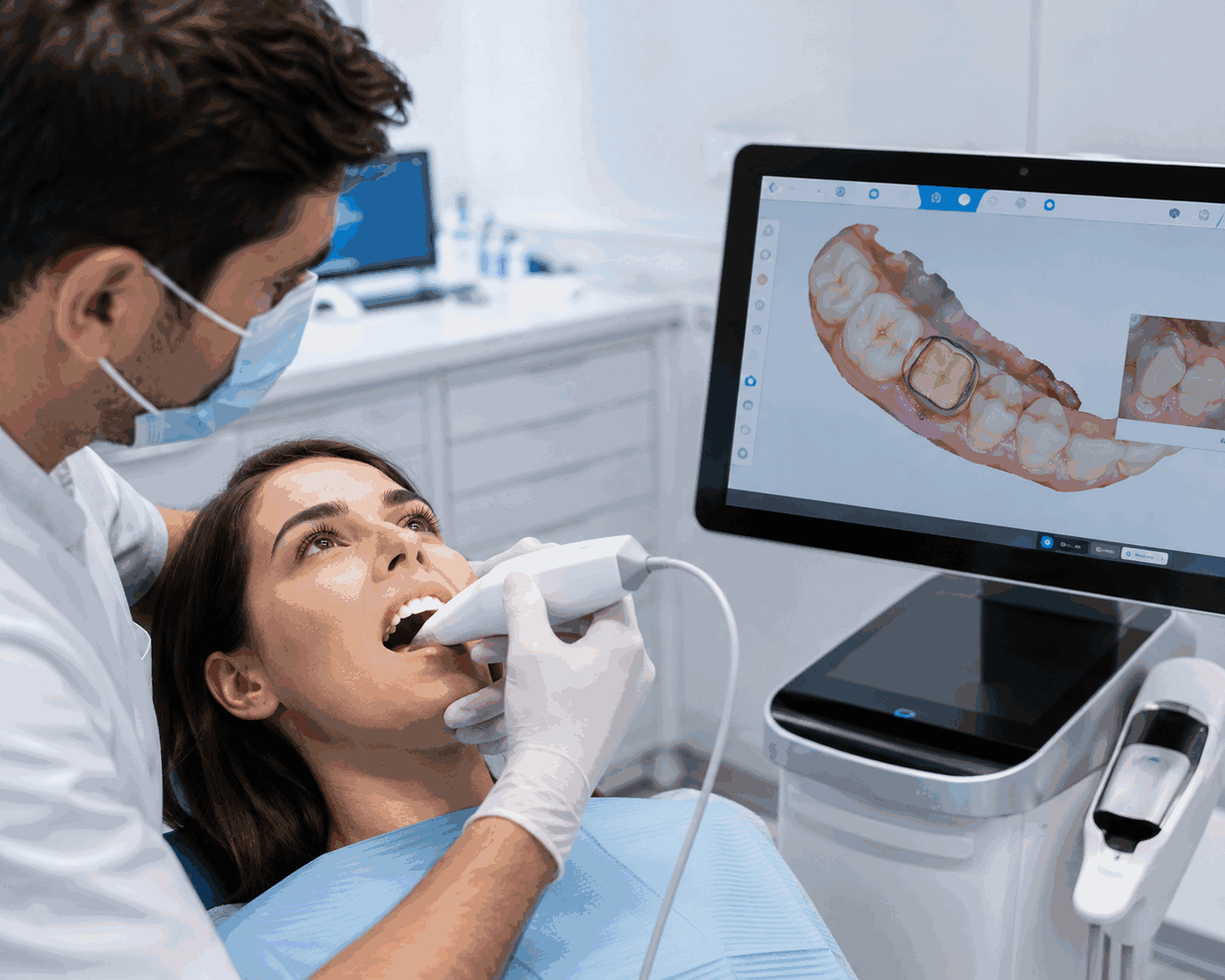
A small scanning camera is moved around the teeth and gums. It records many images and combines them into a three-dimensional model that can be viewed on a screen.
A full-mouth scan records both arches and how the upper and lower teeth meet. The dentist can check the scan during capture and rescan a small area when more detail is needed.
The scan forms one part of the assessment. The dentist also examines the teeth, gums, bite and remaining tooth structure.
Planning crowns for damaged, root canal-treated or heavily restored teeth.
Selected restorations may use digital impressions when clinically suitable.
Digital scans may support implant crowns and other suitable implant restorations.
Digital models can help review tooth position, bite relationships and changes over time.
Several teeth can be assessed together when coordinated restorative planning is required.
CAD means computer-aided design and CAM means computer-aided manufacturing.
The tooth is examined, treated where required and shaped for the selected crown.
The prepared tooth, nearby teeth, opposite arch and bite are captured.
The shape, margins, contacts and biting surface are designed.
The approved design guides manufacturing from the selected material.
Margins, bite, contacts, shade and comfort are checked before placement.
For suitable cases, digital scanning can improve the experience of impression-taking and support clear communication with the dental laboratory.
No bulky trays or unset impression material in many suitable cases.
The model can be reviewed on screen as soon as it is captured.
A small area can be scanned again when more detail is needed.
Digital information can be securely shared for design and fabrication.
The crown’s shape, contacts and bite can be planned digitally.
Stored scan records can support future review and comparison.
Digital impressions are suitable for many patients, including people who find conventional trays uncomfortable. However, scan quality can be affected by access and treatment conditions.
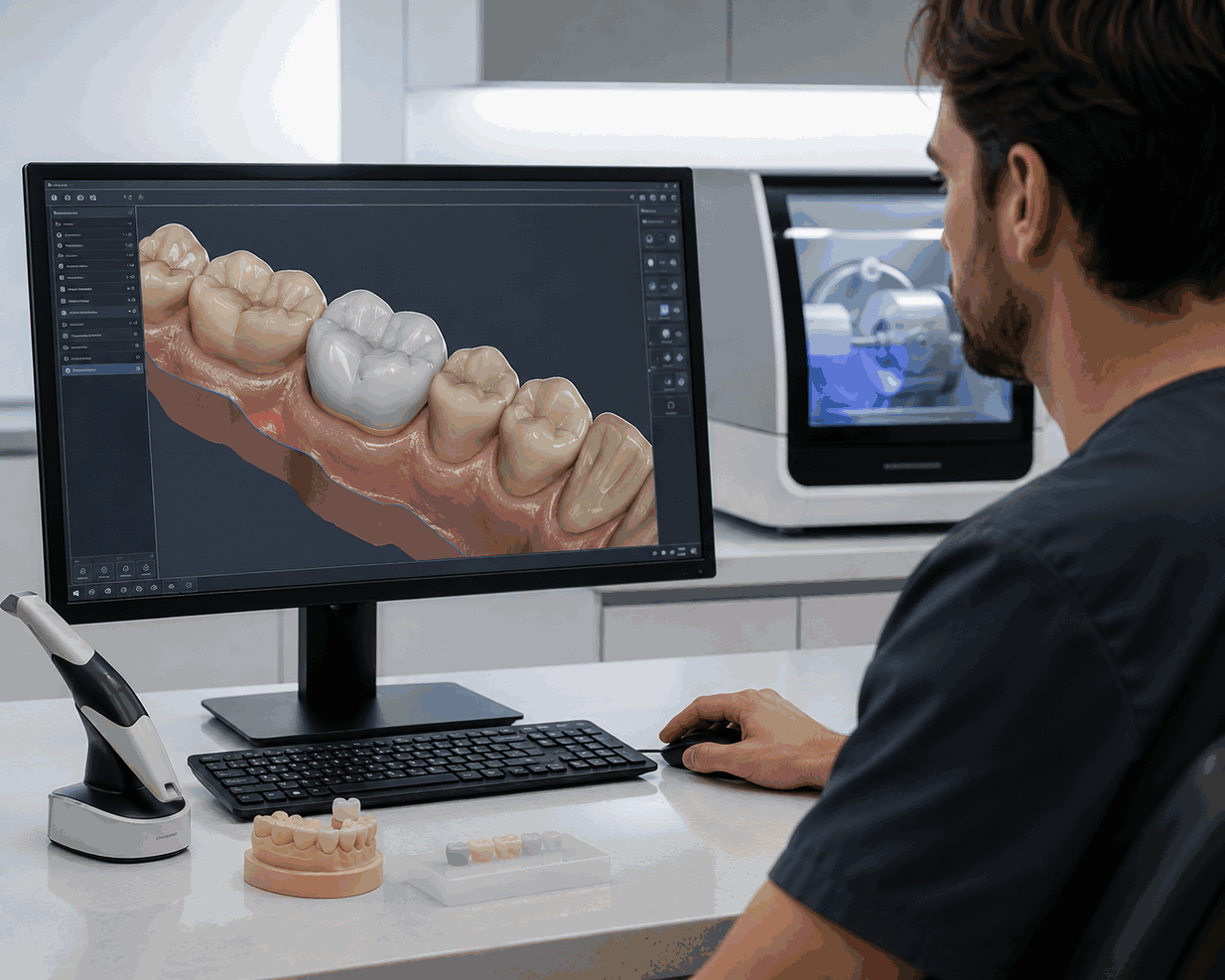
Your dentist will confirm whether digital scanning and a CAD/CAM workflow are suitable after examining the tooth and planned restoration.
The scanner does not cut the teeth and usually causes no pain. Some patients may feel mild pressure or need short pauses.
No. A surface scan records the visible shape of teeth and gums without X-rays. Dental X-rays may still be required.
Many crowns can be designed and manufactured digitally, but suitability depends on the tooth, preparation, material and clinical requirements.
Not necessarily. Some workflows are faster, while others require laboratory stages or additional appointments.
There is no fixed lifespan. Longevity depends on material, remaining tooth structure, bite, hygiene, habits and regular care.
Visit DentoXpert Dental Clinic to discuss digital scanning, crown material, expected appointments, fabrication workflow and treatment cost.