Diabetes and Oral Health
Diabetes is a metabolic disorder in which blood sugar levels become higher than normal. Blood glucose is regulated mainly by insulin, a hormone produced by the pancreas.
Diabetes can occur when the pancreas does not produce enough insulin or when the body is unable to respond properly to insulin. Poorly controlled diabetes can affect several parts of the body, including the teeth, gums and jaw bone.
Good blood sugar control and regular dental care are important because uncontrolled diabetes may increase susceptibility to oral infections and delayed healing.
Three Types of Diabetes
Type 1 Diabetes
Type 1 diabetes is also known as insulin-dependent diabetes mellitus. It occurs when the pancreas produces little or no insulin, resulting in insulin deficiency.
It is more commonly seen in children and young adults, and patients generally require insulin injections to help keep blood sugar levels under control.
Type 2 Diabetes
Type 2 diabetes is also called non-insulin-dependent diabetes mellitus. It may occur because of reduced insulin secretion, insulin resistance or increased glucose production by the liver.
It accounts for the majority of diabetes cases and is more commonly seen in adults, although it can occur at younger ages.
Gestational Diabetes
Gestational diabetes develops during pregnancy. Women who develop gestational diabetes may have an increased risk of developing Type 2 diabetes later in life.
Classic Symptoms of Diabetes
- Polyuria: Increased urination.
- Polydipsia: Increased thirst.
- Polyphagia: Increased hunger.
Oral Changes in Diabetic Patients
Diabetes can influence saliva, wound healing, infection risk and gum health. The effect may be more noticeable when blood sugar levels are poorly controlled.
- Reduced saliva flow may decrease the natural cleansing effect of saliva and increase the risk of tooth decay.
- Wound healing may be slower because blood flow and the body's defence mechanisms can be affected.
- Healing after dental procedures such as extraction, flap surgery or implant placement may take longer.
- Dry mouth may occur in some diabetic patients.
- Burning sensation of the mouth and tongue may occur.
- Fungal infections such as candidiasis may occur more commonly when diabetes is poorly controlled.
- Angular cheilitis may cause inflammation and cracking at the corners of the mouth.
Diabetes, Gingivitis and Periodontitis
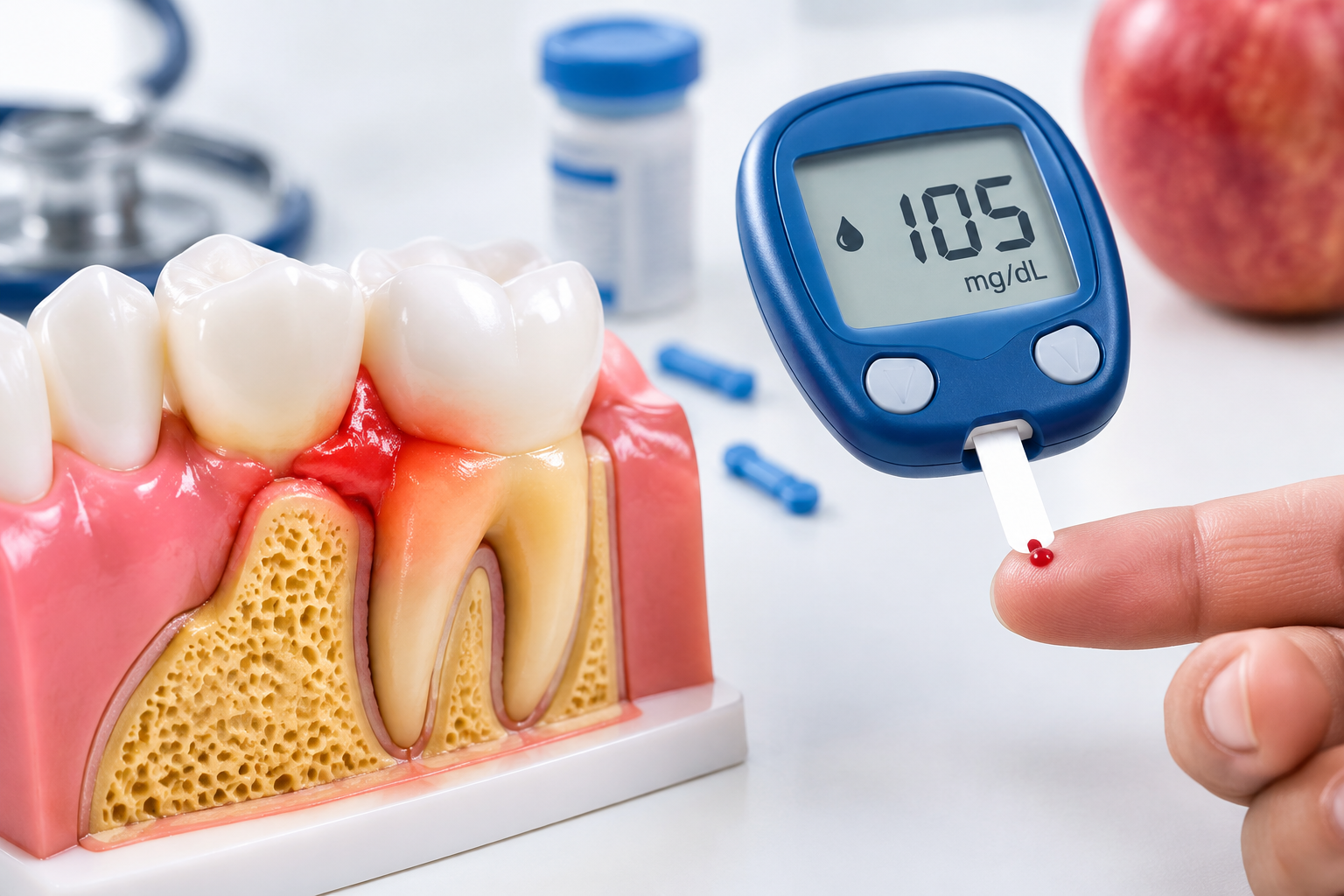
Diabetes itself does not directly cause gingivitis or periodontitis. However, poorly controlled diabetes can weaken the body's defence mechanisms and increase susceptibility to infection.
Periodontitis can lead to loss of attachment between the gums and teeth, increased gum bleeding and formation of periodontal pockets.
As periodontal disease progresses, the bone that supports the teeth may gradually be lost. Severe bone loss can cause teeth to become mobile and may eventually result in tooth loss.
If diabetes is well controlled, the body's defence mechanisms and healing response may be better and the risk of oral complications can be reduced.
Diabetes and Wound Healing
In uncontrolled diabetes, compromised blood flow and reduced defence against infection may delay wound healing.
This is important when planning dental procedures such as tooth extraction, periodontal surgery and dental implants. The dentist may advise blood sugar evaluation before treatment and may coordinate care with the patient's physician.
Smoking can further worsen healing and should be avoided, especially in diabetic patients.
Prevention and Management
- Diabetic patients should take extra care of their oral hygiene because they may be more susceptible to tooth and gum problems.
- The best way to reduce oral complications is to keep blood sugar levels under control.
- Take prescribed medicines regularly and follow the advice of your physician.
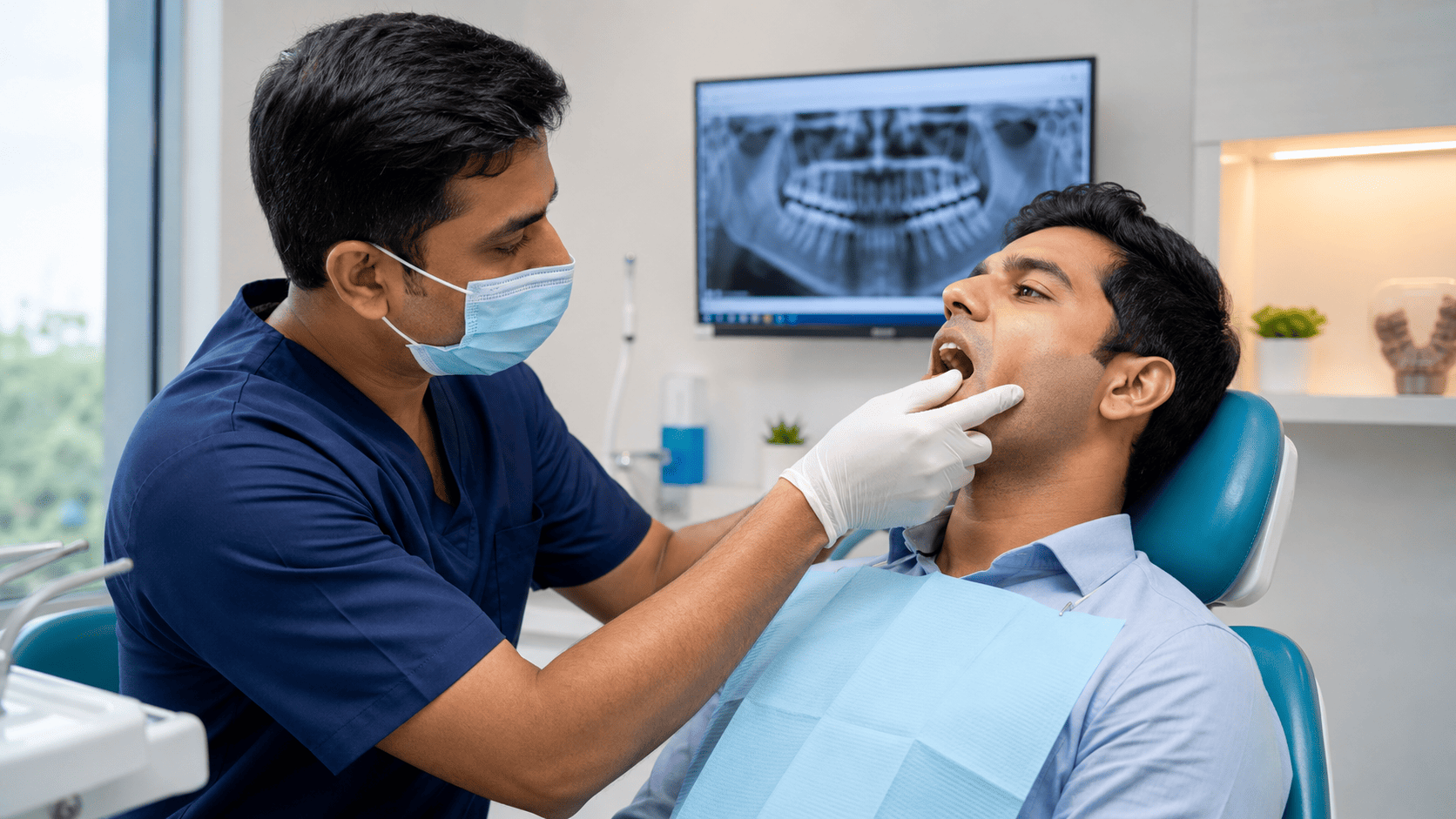
- Visit your dentist every 4 to 6 months or as advised.
- Brush twice daily using the correct brushing technique.
- Floss between teeth and use mouthwash when recommended.
- Inform your dentist about all medicines you are taking.
- Blood sugar levels may need to be checked before extraction, periodontal surgery or other dental treatment.
- Smoking should be avoided because it can increase the risk of gum disease and delayed healing.
- Seek dental advice if you notice swollen gums, bleeding, loose teeth, dry mouth, burning sensation or persistent oral infection.
Conclusion
Diabetes and oral health are closely connected. Poor blood sugar control may increase the risk of gum problems, oral infections, dry mouth and delayed healing after dental treatment.
Regular dental check-ups, good oral hygiene, controlled blood sugar levels and coordination between your dentist and physician can help protect both oral and overall health.
Frequently Asked Questions
Can diabetes affect gum health?
Yes. Poorly controlled diabetes may increase susceptibility to gum infection and can worsen periodontal problems.
Does diabetes delay healing after dental treatment?
Uncontrolled diabetes can affect blood flow and immune response, which may delay healing after procedures such as extraction or gum surgery.
Can diabetes cause dry mouth?
Some diabetic patients may experience reduced salivary flow and dry mouth, which can increase discomfort and the risk of dental decay.
How often should a diabetic patient visit the dentist?
Regular dental check-ups are important. Depending on oral health and diabetes control, the dentist may recommend visits every 4 to 6 months.