Introduction
Most people are aware that smoking can affect the lungs, heart and overall health. However, smoking and tobacco use can also cause significant changes inside the mouth.
The effects may involve the teeth, gums, tongue, palate, supporting bone and the healing response after dental treatment.
Tobacco is available in different forms including cigarettes, cigars, pipes and smokeless tobacco. Whatever the form, long-term tobacco exposure can be harmful to oral tissues.
Smoking can contribute to tooth staining, bad breath, gum disease, delayed healing, tooth loss and changes in the soft tissues of the mouth.
Effects of Smoking on Teeth and Appearance
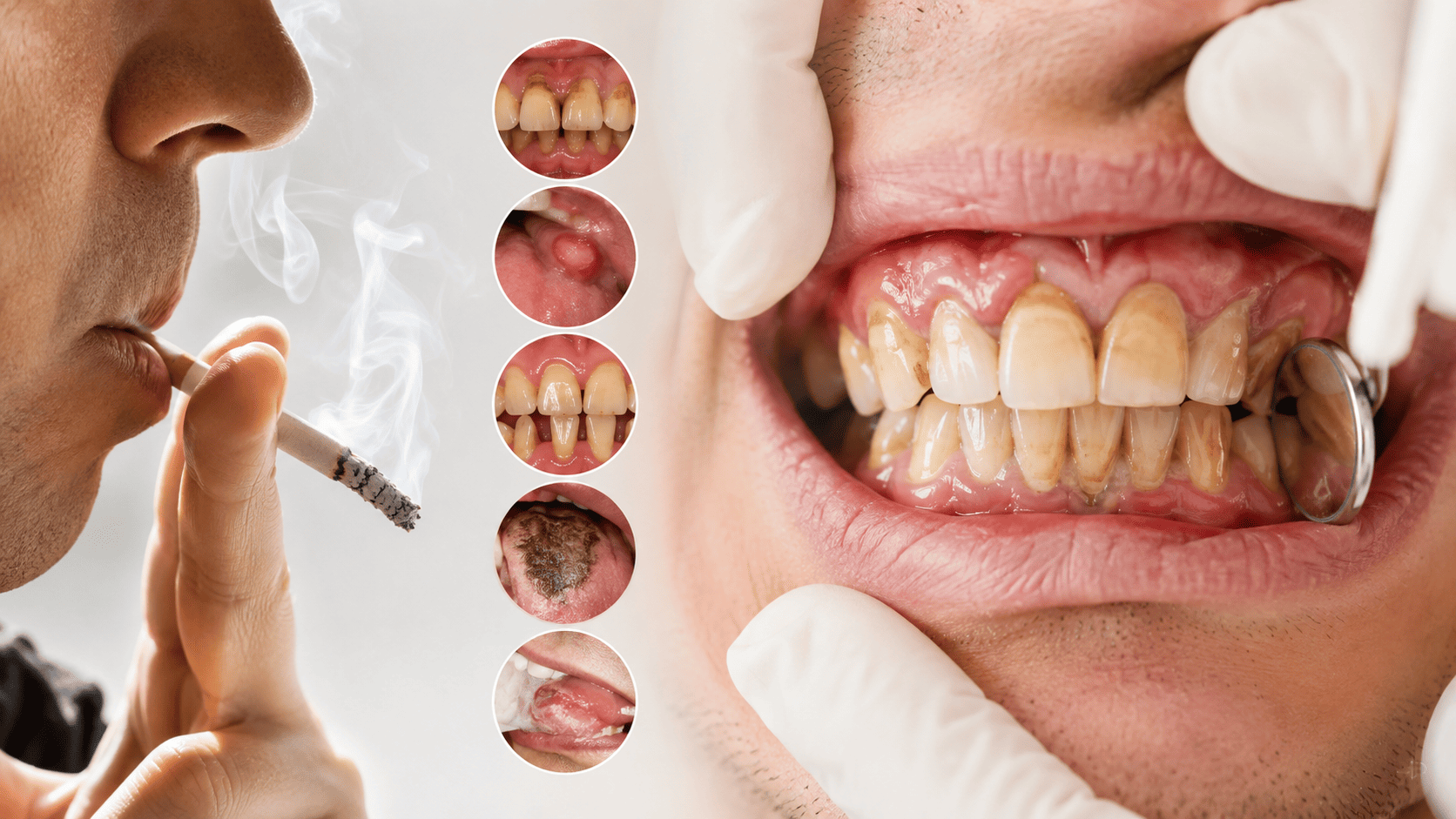
Tobacco smoke contains substances that can gradually affect the appearance and cleanliness of teeth. Regular smoking can produce noticeable staining and may also contribute to other oral hygiene problems.
- Smoking can stain the surface of teeth, producing yellow, brown or darker discoloration.
- Tobacco use can contribute to persistent bad breath.
- Staining and deposits may become more visible when smoking continues for a long period.
- Smokers may require professional dental cleaning to remove surface stains and hardened deposits.
Smoking and Gum Disease
Smoking is an important risk factor for periodontal disease. Periodontal disease affects the gums, periodontal ligament and the bone supporting the teeth.
Tobacco use may interfere with the normal response of gum tissue and can contribute to progressive damage around the teeth.
- Smoking can interfere with the normal blood supply to gum tissue.
- Gum and periodontal damage may progress with fewer obvious warning signs in some smokers.
- Advanced gum disease may lead to gum recession.
- Supporting bone around the teeth may gradually be lost.
- Teeth may become loose when periodontal disease becomes severe.
- Smokers have an increased risk of tooth loss.
Regular periodontal evaluation is particularly important for smokers because some visible signs of gum inflammation can be less noticeable even while the supporting tissues continue to deteriorate.
Smoking Can Delay Healing After Dental Treatment
Healthy blood circulation is important for tissue healing. Smoking can interfere with normal blood flow to the gums and surrounding oral tissues.
As a result, healing may be slower after some dental procedures, including tooth extraction, gum treatment, oral surgery and dental implant procedures.
Patients who smoke should inform their dentist before treatment and carefully follow instructions regarding smoking before and after a dental procedure.
Oral Lesions and Changes Associated With Tobacco
Smoking and tobacco use may cause visible changes to the tissues inside the mouth. Some changes may be relatively minor, while others need professional examination.
Leukoplakia
Leukoplakia can appear as a persistent white patch inside the mouth that cannot easily be wiped away. Tobacco use is an important risk factor associated with this type of oral lesion.
Smoker's Palate
Long-term exposure to tobacco smoke and heat can cause changes to the roof of the mouth. This condition is sometimes referred to as smoker's palate.
Black Hairy Tongue
Tobacco use can contribute to dark discoloration of the tongue and an elongated appearance of the surface projections, commonly described as black hairy tongue.
Acute Necrotizing Ulcerative Gingivitis
Smoking is also associated with an increased risk of certain severe gum infections. Acute necrotizing ulcerative gingivitis may cause painful gums, ulceration and unpleasant breath.
Tobacco and Oral Cancer Risk
Tobacco is one of the major risk factors associated with oral cancer. Cigarettes, pipes and smokeless tobacco can expose the tissues of the mouth to potentially harmful substances.
Changes inside the mouth should not be ignored, particularly when they remain present for an extended period.
Seek professional assessment if you notice:
- A mouth ulcer that does not heal.
- Persistent white or red patches.
- Unexplained swelling or a lump.
- Unexplained oral bleeding.
- Persistent discomfort or pain.
- Difficulty swallowing or chewing.
- Other unusual changes in oral tissues.
A persistent oral lesion does not automatically mean cancer, but it should be examined by a dentist or appropriate healthcare professional so the cause can be determined.
Axe the Monster: Quit the Habit
Quitting tobacco is one of the most important steps a person can take to protect oral and general health.
Nicotine can make quitting difficult, so some people benefit from professional guidance, behavioural support or appropriate smoking cessation treatment.
- Make a clear decision to stop smoking or tobacco use.
- Select a suitable quit date.
- Identify situations that normally trigger the urge to smoke.
- Try to avoid or manage those triggers, especially during the initial quitting period.
- Maintain good oral hygiene while quitting.
- Brush twice daily with fluoride toothpaste.
- Visit your dentist regularly for examination and professional cleaning.
- Speak with an appropriate healthcare professional if cravings or withdrawal symptoms are difficult to manage.
- Nicotine replacement options may be considered when appropriate under professional guidance.
- Ask your dentist or healthcare provider about available tobacco cessation support.
Dental Care for Smokers and Tobacco Users
People who currently smoke or use tobacco should pay particular attention to their oral hygiene and dental check-ups.
Regular dental examinations can help identify gum problems, staining and suspicious changes in oral tissues at an earlier stage.
- Brush your teeth twice daily using fluoride toothpaste.
- Clean between the teeth with dental floss or an interdental brush.
- Attend professional dental cleaning when advised.
- Check your mouth for unusual ulcers, patches, swelling or other changes.
- Do not ignore persistent bad breath.
- Seek dental advice for bleeding gums, gum recession or loose teeth.
- Discuss tobacco cessation support with your dentist or healthcare provider.
Conclusion
Smoking and tobacco use can affect many areas of oral health. Problems may range from tooth staining and bad breath to gum disease, delayed healing, tooth loss and potentially serious changes in oral tissues.
Quitting tobacco, following good oral hygiene practices and attending regular dental check-ups can help protect your teeth and gums.
If you notice smoking-related changes in your mouth, such as gum problems, persistent ulcers, unusual patches or tooth mobility, you can consult DentoXpert Dental Clinic in Thane for a professional oral and dental examination.
Frequently Asked Questions
How does smoking affect teeth?
Smoking can stain teeth, contribute to bad breath and increase the risk of gum disease and eventual tooth loss.
Can smoking cause gum disease?
Smoking is an important risk factor for periodontal disease and may contribute to damage involving the gums and supporting bone around the teeth.
Does smoking affect healing after tooth extraction?
Smoking can interfere with normal healing after dental procedures. Patients should follow their dentist's instructions about smoking before and after an extraction.
Can smoking cause tooth discoloration?
Yes. Tobacco exposure can cause yellow, brown or darker staining on the surfaces of teeth.
What mouth changes should smokers get checked?
Persistent white or red patches, ulcers that do not heal, unexplained swelling, bleeding or other unusual oral changes should be professionally examined.
Can a dentist help me stop smoking?
A dentist can explain the effects of tobacco on oral health, monitor changes in the mouth and guide patients toward appropriate tobacco-cessation support.